
Chimney flashing repair in Peterborough explained. Failed chimney flashing is one of the most common causes of roof leaks in older Peterborough homes. What it is, why it fails, what Code 4 lead means, what a repair costs, and a real job from Park Road.
Chimney lead flashing is the strip of lead that seals the gap where a chimney stack meets the roof tiles. When it splits, lifts or comes loose from the brickwork, rain runs down the outside of the stack and straight into the roof. In older Peterborough homes it is one of the most common causes of leaks we are called out to.
Need a roofer in Peterborough?Free drone roof survey (worth £250) and a fixed price the same day.
A chimney flashing repair in Peterborough, replacing the lead around one stack, typically costs £400–£1,050 per stack, depending on the size of the chimney, access and how much of the surrounding roof needs attention. Our leadwork and chimney repair page covers the full service.
A real job: Park Road, Peterborough
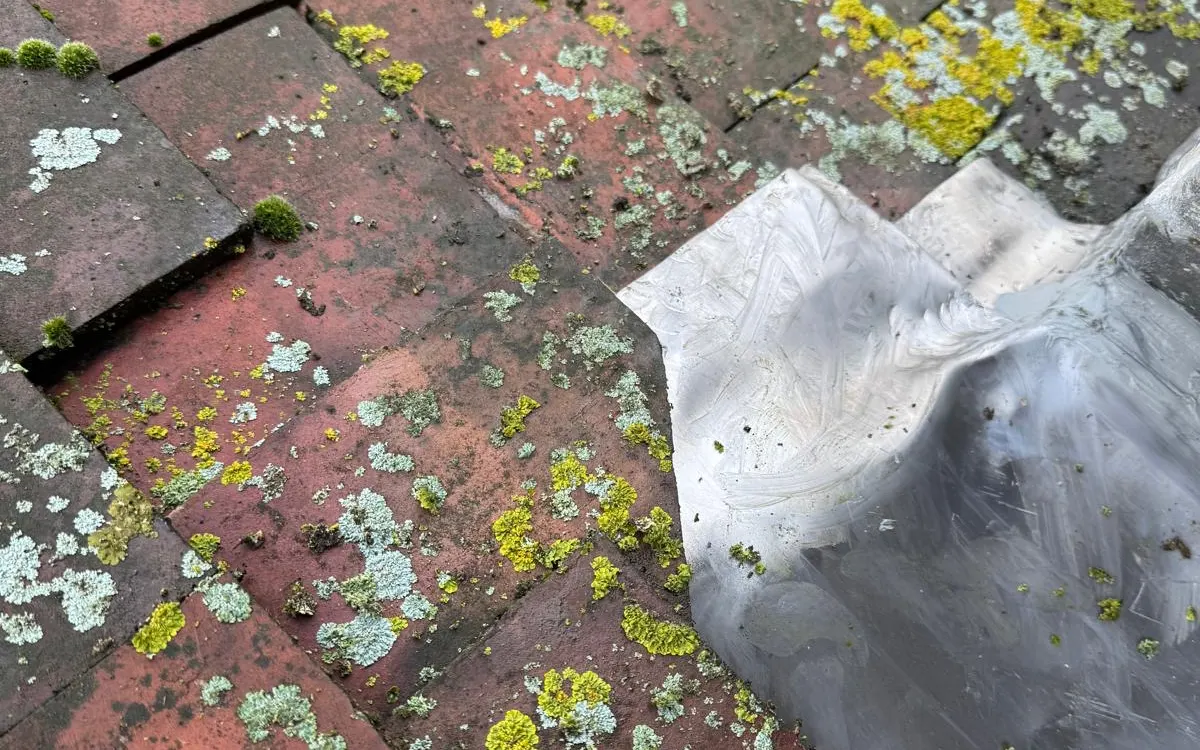
This month we replaced the chimney lead flashing and the missing roof tiles on a period house on Park Road, Peterborough. The house has a clay plain tile roof, two tall brick chimney stacks and the kind of detailing you find all over the older streets around Park Road, Thorpe Road and Millfield.
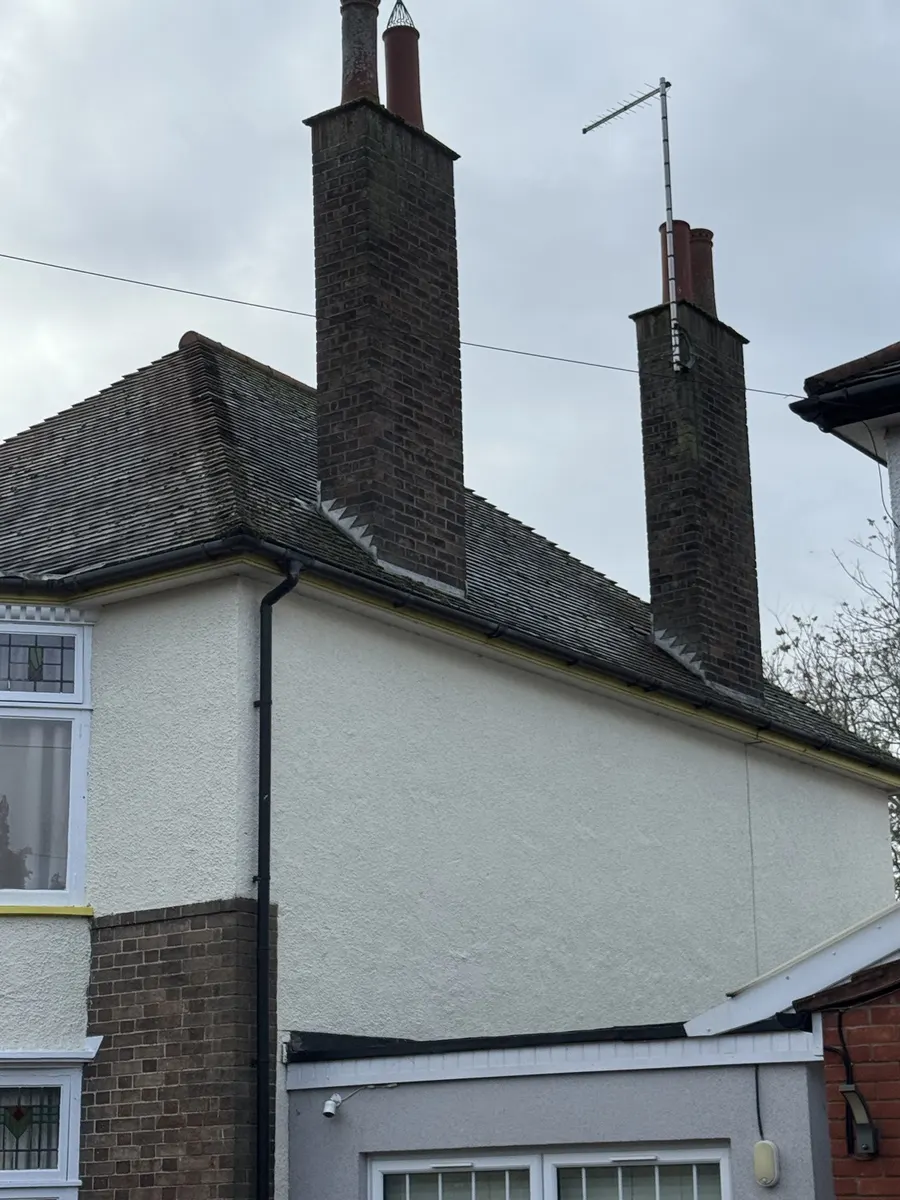
What we did:
- Removed the old, failed flashing and raked out the mortar joints it was fixed into.
- Fitted new Code 4 lead step flashings up the sides of the stack and an apron across the front.
- Turned the lead into the brick joints, fixed it with lead wedges and pointed it in so water cannot get behind it.
- Replaced the missing and slipped clay plain tiles around the chimney, using tiles that match the existing roof.
- Checked the rest of the roof and sent the homeowner photos of the finished work.
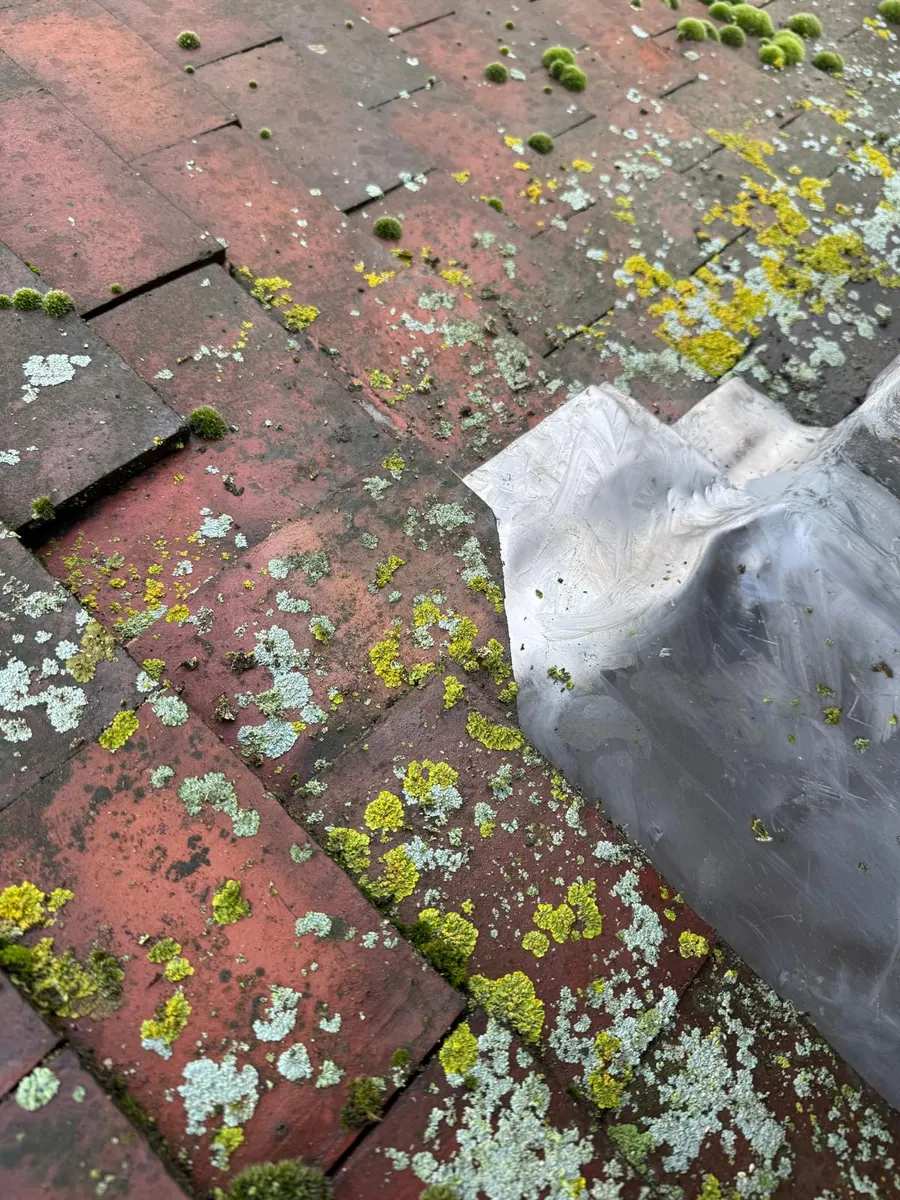
The new lead is bright silver at first. It weathers to a dull grey within months. Some roofers apply patination oil to even out the colour while it weathers.
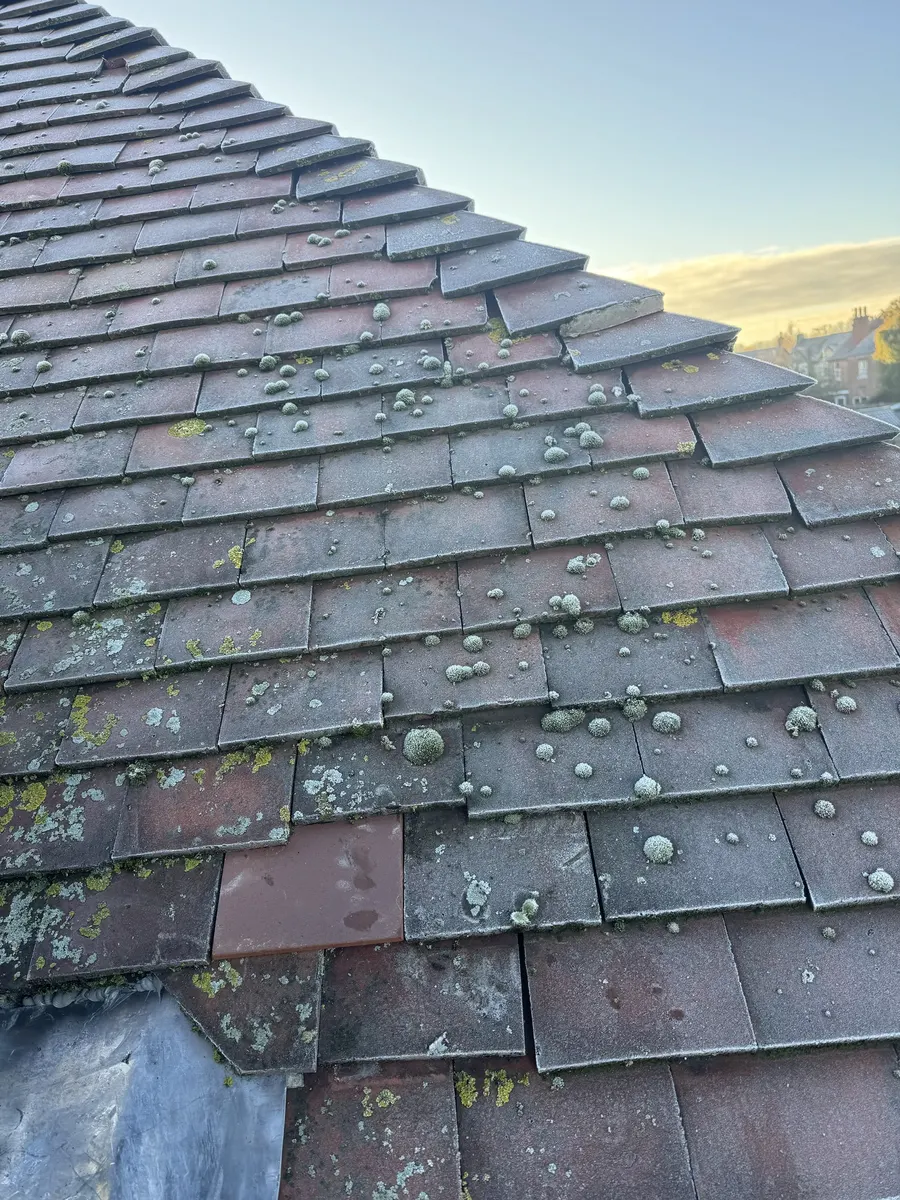
Why chimney flashing matters
A chimney interrupts the roof covering on all four sides. Water has to be guided around the front, sides and back of the stack, and every one of those junctions relies on the flashing. Industry guidance lists the area around the chimney and its flashing among the most common places a roof leaks (PBC Today).
It also matters for insurance. Damaged lead flashing around chimneys on older houses is listed by the insurer Ageas among the common reasons roof damage claims are not covered, because worn flashing is usually treated as wear and tear rather than storm damage (Ageas). Keeping it in good order protects you from a leak and from a refused claim.
What is Code 4 lead?
Lead sheet for roofing is made to the British and European standard BS EN 12588 and sold in "codes" that describe its thickness and weight.
| Lead code | Thickness | Weight | Typical use |
|---|---|---|---|
| Code 3 | 1.32 mm | 14.97 kg/m² | Soakers only |
| Code 4 | 1.80 mm | 20.41 kg/m² | Step flashings, aprons, cover flashings, chimney flashings |
| Code 5 | 2.24 mm | 25.40 kg/m² | Back gutters, wider aprons, more exposed details |
Source: CIPHE sheet lead guide and BS EN 12588 product data (CIPHE).
Code 4 is the standard choice for chimney step flashings and aprons on houses: thick enough to stay put in the wind, but soft enough to dress neatly over tiles. Thinner Code 3 is meant for soakers hidden under the tiles, not for exposed flashings.
How long does lead flashing last?
Correctly fitted lead is one of the longest-lasting materials on a roof:
- Historic Environment Scotland says evidence shows lead can perform satisfactorily for more than 100 years (Engine Shed).
- The Lead Sheet Training Academy says correctly installed lead sheet can last over 80 years for lower codes and over 100 years for higher codes (RIBA Journal).
So when chimney flashing fails after 20 or 30 years, the lead itself is rarely worn out. The usual causes are how it was fitted or what it was fixed to.
Why chimney flashing fails
These are the problems we find most often on Peterborough roofs:
- Mortar failure. The lead is tucked into the brick joints and held with mortar. Over time the mortar cracks and falls out, the lead peels away from the stack and water gets behind it.
- Pieces that are too long. Lead expands and contracts with temperature. Lengths that are too long, or nailed too tightly, crack along the bends after a few years.
- The wrong material. Self-adhesive flashing tape, mastic or a smear of cement instead of lead. These look fine for a season, then crack.
- Missing or slipped tiles next to the stack. Tiles beside a chimney are cut and fixed in awkward spots, so they are often the first to slip. A gap here lets rain under the flashing.
- Wind and storms. Strong gusts lift loose lead and tiles, especially on exposed stacks.
- Lead theft. Lead has scrap value. Stolen flashing leaves the joint wide open.
Peterborough is one of the drier parts of England, with roughly 570 mm of rain a year on long-term averages (Population Review / WorldClim). But dry years hide the problem: a failed flashing can stay quiet for months, then leak badly in one wet spell. A local weather watcher recorded more than 130 mm of rain in a single recent February, against an average of 41 mm (Peterborough Telegraph).
Want a price for your home?Free drone roof survey (worth £250) and a fixed price the same day.
Signs your chimney flashing needs attention
You can check most of these from the ground with binoculars, or from the loft:
- Water stains on the ceiling or on the chimney breast, especially after heavy rain.
- Damp or peeling wallpaper next to the chimney breast.
- Lead that is lifting, bent away from the brickwork or flapping in the wind.
- Gaps or missing mortar where the lead meets the bricks.
- Missing, cracked or slipped tiles around the base of the stack.
- Mastic, tape or cement smeared around the chimney, a sign of a quick fix that will not last.
- A damp patch or daylight around the chimney when you look from inside the loft.
If you see any of these, it is cheaper to fix the flashing now than to replace a ceiling, insulation or rotten timbers later.
What a proper chimney flashing repair includes
| Part | What it does | What good looks like |
|---|---|---|
| Front apron | Seals the downhill face of the stack | One piece of lead dressed over the tiles, turned into a brick joint |
| Step flashings | Seal the sides of the stack | Stepped to follow the brick courses, each step tucked into a joint and wedged |
| Soakers | Sit under the tiles at the sides | Code 3 or Code 4 lead, one per tile course |
| Back gutter | Seals the uphill side of the stack | Lead gutter that sends water around the stack, not into it |
| Pointing | Holds the lead in the joints | Fresh mortar or lead sealant, no gaps |
| Tiles | Close the roof around the stack | Matching tiles, nothing missing or loose |
Typical prices in Peterborough (2026)
| Job | Typical price (incl. VAT) |
|---|---|
| Replace lead flashing on one chimney stack | £400 – £1,050 |
| Replace a few slipped or missing tiles | £170 – £460 |
| Repoint a chimney stack (if the brickwork is also failing) | £340 – £900 |
These are guide prices, not a quote. Scaffolding, the height of the stack and the roof type all change the price, so we give a fixed written price after a free roof check.
Frequently asked questions
How much does it cost to replace chimney lead flashing in Peterborough?
Replacing the lead flashing on one chimney stack typically costs £400–£1,050 including VAT, plus scaffolding if the stack can't be reached safely from the roof. We give a fixed written price after a free roof check with photos.
What code lead should be used for chimney flashing?
Code 4 lead, which is 1.80 mm thick and weighs 20.41 kg/m², is the standard choice for chimney step flashings and aprons on houses. Code 5 is often used for back gutters and more exposed details. Code 3 is only for soakers hidden under the tiles.
How long does chimney lead flashing last?
Correctly fitted lead flashing can last more than 80 years, and lead roofing has been shown to last more than 100 years. Most early failures come from failed mortar, pieces that are too long, or poor fitting rather than worn-out lead.
How do I know if my chimney flashing is leaking?
Look for water stains on the ceiling or chimney breast after rain, damp wallpaper next to the chimney, lead lifting away from the bricks, missing mortar where the lead meets the brickwork, and missing or slipped tiles around the stack.
Will my home insurance pay for a leaking chimney flashing?
Usually not, if the flashing has simply worn out or the mortar has failed, because insurers treat that as wear and tear. Sudden storm damage may be covered. Keeping the flashing maintained avoids both the leak and a refused claim.
Do you repair chimney flashing outside Peterborough?
Yes. We cover Peterborough and up to 40 miles around, including Stamford, Market Deeping, Oundle, Whittlesey, Yaxley, Spalding and Bourne.
Get your chimney flashing checked
Upsize Property Renovation Ltd is a Peterborough roofing contractor. We call back within 15 minutes during opening hours, carry out a free drone roof survey so you can see the chimney close up, and give you a fixed written price with a 10-year workmanship guarantee.
Book a free chimney and roof check or call 0800 193 9030.






 In progress
 In progress