
Lifted & missing tiles
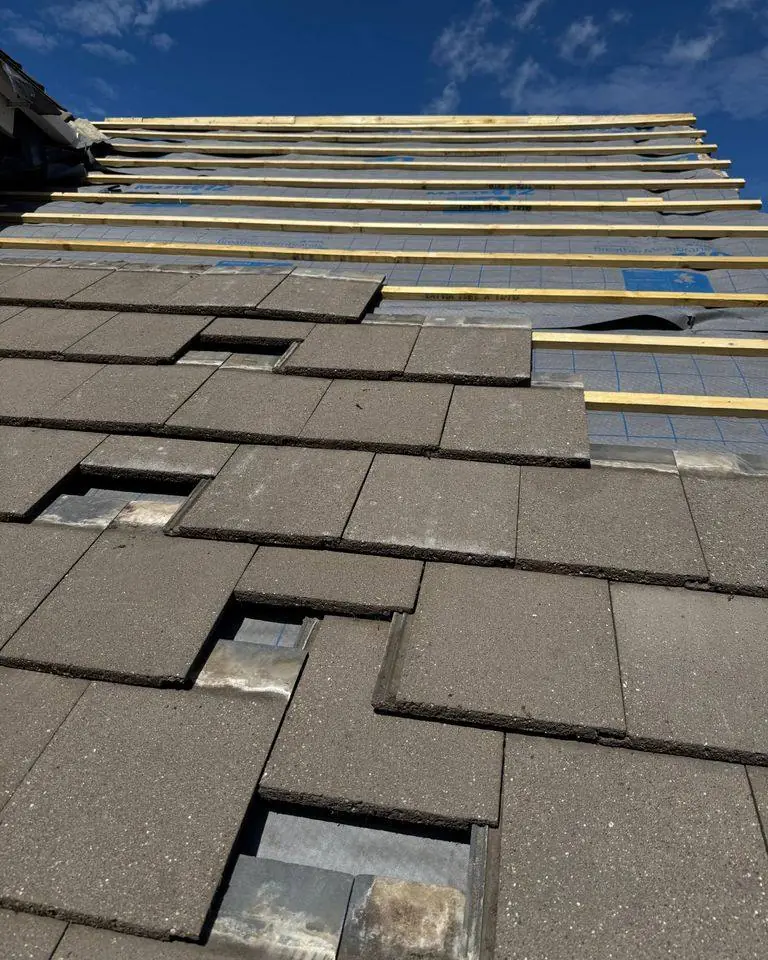
Tiles lifted or blown off replaced and mechanically fixed to resist future wind uplift.
High winds lift tiles, strip ridges and tear flashings. We make your roof safe, document the damage for your insurer and repair it to the current wind-uplift standard.
After named storms and strong gales, across Peterborough, the Fens, South Lincolnshire and Rutland.
Tiles lifted or blown off replaced and mechanically fixed to resist future wind uplift.
Ridge and hip tiles stripped by the wind refixed, ideally with a dry-fix system.
Exposed gable verges are often the first to fail. We refix them or fit a dry verge.
Loose pots, cowls and lifted lead flashings secured and repaired.
Lifted or torn felt and membrane flat roofs repaired or replaced with EPDM.
Dated photos and a written damage report to support your storm claim.
From the ground and the loft only. Never climb onto a roof after a storm.
Book a free roof checkWind does not push tiles off. It sucks them up. As wind flows over a roof, it creates uplift, which is strongest at the edges: the ridge, verges, eaves and corners. Tiles held only by their weight or by old mortar are the first to go.
The fenland and open countryside around Peterborough leave many roofs exposed. During Storm Eunice in February 2022, gusts of 66mph were recorded near Peterborough at RAF Wittering. Across the UK, the ABI estimated around 169,500 property claims from that month’s three storms, costing £473 million.
The British Standard for slating and tiling, BS 5534, was updated to assume higher wind loads. Single-lap tiles, ridges and hips must now be mechanically fixed, and perimeter tiles need extra fixing. Repairing storm damage to this standard, rather than just bedding tiles back on mortar, is the best way to stop it happening again.
The Met Office names a storm when it could cause disruption or damage serious enough for an amber or red warning. A storm warning is a good time to check that your gutters are clear and nothing loose is lying on the roof.
Send photos of the damage. We prioritise roofs that are letting water in or have loose tiles.
Anything loose is secured and the roof made watertight.
Dated photos and a written report of the storm damage, with a fixed price for the repair.
Tiles, ridges and verges refixed to resist future wind uplift, with a 10-year written guarantee.
Typical prices for storm repairs, including access and waste. Every roof is different, so we always give a fixed, written price after a free roof check.
Get your fixed price| Job | Upsize guide price | Typical elsewhere* |
|---|---|---|
| Replace and refix storm-lifted tiles | £170 – £500 | £200 – £600 |
| Refix a ridge with dry-fix system | £500 – £1,400 | £600 – £1,750 |
| Dry verge system (per gable) | £400 – £1,050 | £500 – £1,300 |
| Re-secure chimney flashing | £290 – £800 | £350 – £1,000 |
| Emergency make-safe | £170 – £400 | £200 – £500 |
*Illustrative figures only. “Typical elsewhere” shows prices around 25% higher than our guide prices, to illustrate how we compare. Guide prices include VAT and are not a quote.
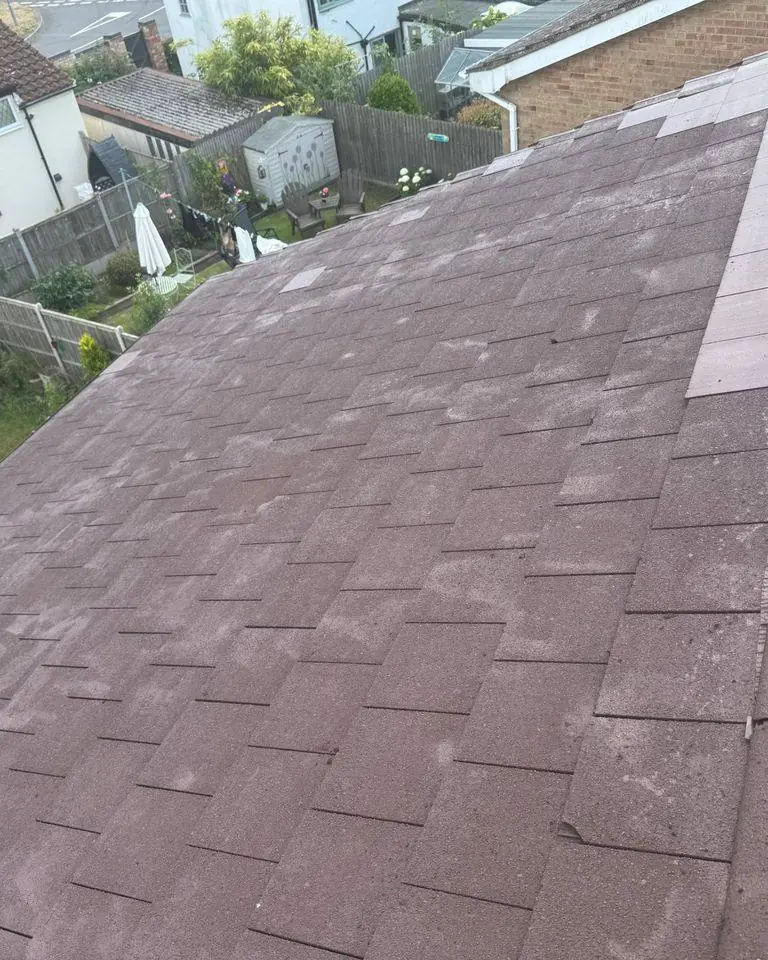
Real photos from our own roofing jobs around Peterborough. No stock images.
We work to current British Standards, HSE guidance and Building Regulations. Here are the sources behind the advice on this page.
Under BS 5534, mortar can no longer be relied on as the only fixing. Single-lap tiles, hips and ridges must be mechanically fixed, and the standard covers re-roofing and repairs.
Gusts of 66mph were recorded near Peterborough (RAF Wittering) on 18 February 2022, during Storm Eunice.
The February 2022 storms led to around 169,500 home and business property claims, costing insurers an estimated £473 million.
A storm is named when it could cause disruption or damage serious enough for an amber or red warning. Wind is usually the main factor.
Contact your insurer as soon as possible, photograph the damage without putting yourself at risk, and keep receipts for any emergency repairs.
Can't see your question? Call 0800 193 9030 or send us a message.
Most buildings insurance covers sudden storm damage, such as tiles blown off in a gale. It does not usually cover wear and tear or damage caused by poor maintenance. Check your policy wording and report the damage as soon as possible.
It depends on the roof’s condition and exposure. Well-fixed roofs withstand strong gales, but loose tiles, old mortar-bedded ridges and exposed verges can fail in gusts of 50–60mph or less. Many insurers define a storm by wind speed, so check your policy.
As soon as possible. Even one missing tile lets rain reach the underlay and timbers, and loose tiles can fall and injure someone. A quick make-safe limits the damage and supports your claim.
Usually, yes. Insurers expect you to prevent further damage, and most cover reasonable emergency repairs. Keep receipts and photos and tell your insurer what was done.
Older ridges are held only by mortar, which cracks over time. The wind lifts the loose tiles. BS 5534 now requires ridge tiles to be mechanically fixed, and a dry-fix ridge system prevents it happening again.
Clear gutters, secure or remove anything loose near the roof, and fix any slipped tiles or cracked ridge mortar before winter. A roof check in autumn is the best prevention.
We provide the photos, a written damage report and a fixed price, which is what most insurers need. Your claim stays between you and your insurer, but we can speak to their loss adjuster if asked.
Based in Peterborough (PE1), we work across Cambridgeshire, South Lincolnshire, Rutland and Northamptonshire, Monday to Saturday.
Our home patch, where we can usually attend fastest.
Regular work across the surrounding villages and towns.
Up to 40 miles from Peterborough.
Send your scope or tell us about your roof. We reply within one working day.






 In progress
 In progress
We use Google Analytics cookies to see which pages help customers, so we can improve the site. No advertising cookies. Cookie policy