
Chimney flashings
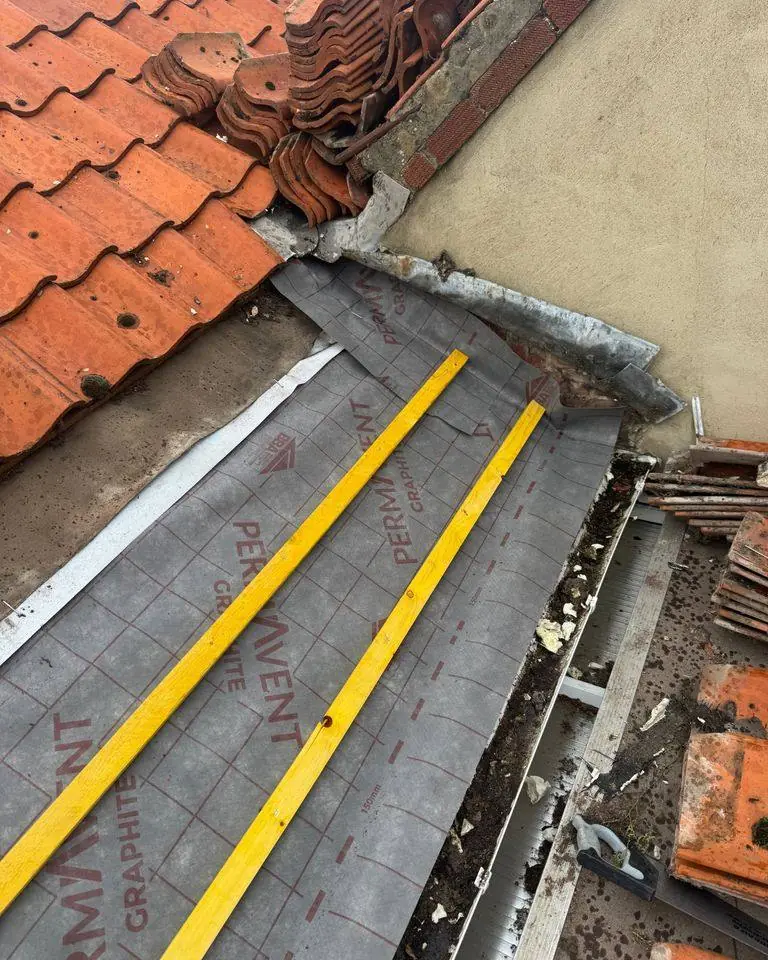
Step and cover flashings around chimney stacks replaced in lead, chased and pointed into the brickwork.
Lead flashings, valleys and chimney stacks are where most roofs start to leak. We repair and replace them properly, in the right code of lead and the right lengths, to last for decades.
For houses, period properties and commercial buildings across Peterborough and the surrounding villages.
Step and cover flashings around chimney stacks replaced in lead, chased and pointed into the brickwork.
Worn or split lead valleys replaced with the correct code and lap lengths.
Lead to walls, dormers, bays and porches, and lead-covered flat areas.
Weathered mortar raked out and repointed to stop water soaking into the stack.
Cracked flaunching (the mortar cap) renewed, and loose pots and cowls secured.
Unsafe or leaning stacks rebuilt above the roof line, or removed and the roof made good.
Check from the ground with binoculars, and from the loft.
Book a free roof checkChimneys stand above the roof and take the full force of wind and rain, and the joint between stack and roof is a natural weak point. Many “roof leaks” are actually chimney leaks.
According to the Lead Sheet Training Academy, correctly installed lead sheet can last over 80 years, and over 100 years for heavier codes. Lead fails early when it is installed wrongly: pieces that are too long split as they expand and contract, so flashings should generally be no longer than 1.5m. We use the right code for each job, keep to the recommended lengths and laps, and chase flashings properly into the brickwork rather than relying on sealant.
Chimney work is high-level work. The HSE reports that almost one in five deaths in construction involve roof work, so we always use proper access, either scaffold or a chimney access platform, never just a ladder.
We check the stack, flashings and lead from safe access, and from the loft for signs of water.
A written price listing the lead code, the work and the access needed.
Lead dressed, fixed and pointed; stack repointed or rebuilt as agreed.
Photos of the finished work and a 10-year written guarantee.
Typical prices, excluding scaffold unless stated. Most chimney work needs scaffold or a chimney platform, which we include in your quote. Every roof is different, so we always give a fixed, written price after a free roof check.
Get your fixed price| Job | Upsize guide price | Typical elsewhere* |
|---|---|---|
| Replace chimney lead flashings | £400 – £1,050 | £500 – £1,300 |
| Repoint a chimney stack | £340 – £900 | £400 – £1,100 |
| Renew flaunching and secure pots | £290 – £700 | £350 – £900 |
| Replace a lead valley | £700 – £1,700 | £900 – £2,100 |
| Rebuild a chimney above roof line | £1,700 – £4,600 | £2,100 – £5,750 |
| Cap an unused chimney | £170 – £400 | £200 – £500 |
*Illustrative figures only. “Typical elsewhere” shows prices around 25% higher than our guide prices, to illustrate how we compare. Guide prices include VAT and are not a quote.
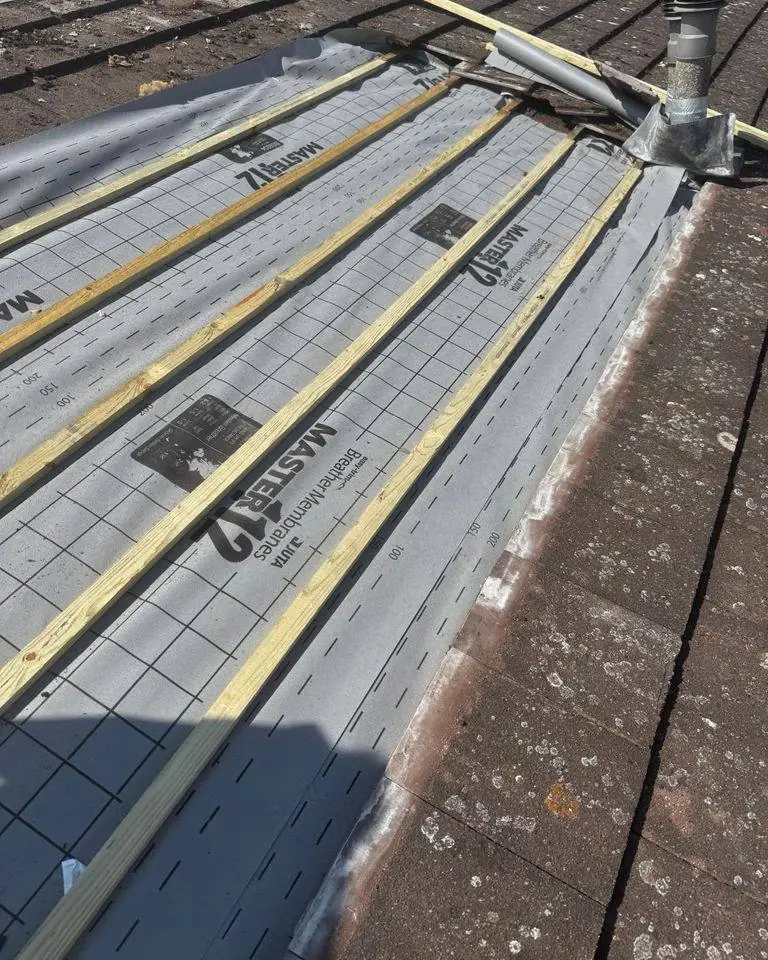
Real photos from our own roofing jobs around Peterborough. No stock images.
We work to current British Standards, HSE guidance and Building Regulations. Here are the sources behind the advice on this page.
Flashings should generally be no longer than 1.5m. Correctly installed lead can last over 80 years, and over 100 years for heavier codes.
Almost one in five deaths in construction work involve roof work. HSE advises treating every roof as fragile until a competent person confirms otherwise.
Approval is needed for larger re-roofs, structural alterations, a covering with different fire performance, or one that adds 15% or more to the roof’s weight.
Can't see your question? Call 0800 193 9030 or send us a message.
Replacing the lead flashings around a typical chimney stack usually costs £400–£1,050, plus access if scaffold is needed. The price depends on the stack size and whether repointing is needed at the same time.
Correctly installed lead can last over 80 years, and over 100 years for heavier codes, according to the Lead Sheet Training Academy. Early failure is usually due to pieces that are too long, the wrong code or poor fixing.
Lead sheet comes in different thicknesses, called codes. The right code depends on the job: flashings, valleys, gutters and flat areas each need a suitable thickness. We choose the code for each detail following the Lead Sheet Training Academy’s guidance.
Common causes are failed flashings, eroded mortar joints, cracked flaunching or an uncapped flue letting rain in. Condensation inside a disused flue can also cause damp. An inspection will find which it is.
Often, yes. A noticeable lean is usually caused by sulphate attack on the mortar and can become dangerous in high winds. We assess it and advise whether to rebuild or remove it.
Removing the stack above the roof is often possible and is then roofed over. Removing chimney breasts inside affects structure and needs building regulations approval, and party wall rules may apply.
In most cases, yes. Safe access is a legal requirement for work at height. Small jobs can sometimes be done from a chimney access platform or roof ladder; we include access in every quote.
Based in Peterborough (PE1), we work across Cambridgeshire, South Lincolnshire, Rutland and Northamptonshire, Monday to Saturday.
Our home patch, where we can usually attend fastest.
Regular work across the surrounding villages and towns.
Up to 40 miles from Peterborough.
Send your scope or tell us about your roof. We reply within one working day.






 In progress
 In progress
We use Google Analytics cookies to see which pages help customers, so we can improve the site. No advertising cookies. Cookie policy